
What a Recording Can and Can’t Tell You
What you hear may not be what’s really there.
A recording offered as evidence carries more than the words on it. Its technical history, meaning how it was captured, encoded, copied, and stored, shapes how much weight it can bear. A recorded call, a voicemail, a body-camera file, or a 911 recording may sound clear, or may be too compromised to rely on. Forensic audio examination is how you find out which.
The work is careful and bounded: clarifying degraded audio where the source allows, checking whether a recording is continuous and unaltered, and documenting what the analysis can and cannot support. It does not advocate for either party. The same methods are applied whether the recording helps the side that retained me or not, the goal is an accurate, defensible read of what the audio actually contains.
What is Forensic Audio?
At its core, forensic audio is the scientific analysis of sound recordings for use in legal proceedings. These can include anything from 911 calls to security camera footage to audio captured on a phone. By analyzing these recordings, a forensic examiner can clarify audio quality, compare voices, and assess whether a recording is authentic.
Use Cases of Forensic Audio
Forensic audio analysis has a wide range of applications in both criminal and civil cases. In these cases, audio recordings can be examined to help support or challenge various claims.
“Audio has an almost magical ability to convince, and to mislead.”
Criminal Cases
Audio evidence can be central to how a case is understood. Examination does not decide guilt or innocence. That is for the court. It can establish what a recording contains, whether it is authentic, and how far it can be relied on.
Examples of how forensic audio examination is used in criminal matters:
- Recorded calls or voicemails examined to establish timelines and assess consistency with other statements.
- A recorded phone call examined for authenticity and continuity when a matter turns on what was said.
- Interview or interrogation audio examined for completeness and for signs of editing, relevant to either side.
- A recording offered to place or exclude a person from an event, examined for what it can reliably support.
In each, the examiner reports what the audio can and cannot support, and the limits of that analysis.

Civil Cases
In civil cases, forensic audio analysis is often used to help resolve disputes and provide evidence of wrongdoing. Some examples of civil cases where audio was used include:
- Audio evidence can be analyzed in employment disputes to determine the authenticity and accuracy of employee statements.
- Forensic audio analysis can help establish if a contract was signed under duress or if fraudulent activities took place during negotiations.
- In a divorce case, audio recordings of conversations between the involved parties can be analyzed to determine if one party made any false or incriminating statements.
- In cases of domestic violence, forensic experts can help establish the presence of abusive language or threats made by one party towards the other.
- Audio recordings can be analyzed to determine the cause of an accident or to establish liability in cases of personal injury.
- Audio analysis can help determine if copyrighted material has been used without permission, such as background music, sound effects, or voice recordings, or if audio recordings have been tampered with.
- Forensic audio experts detect manipulation of audio evidence, such as selectively editing or deleting parts of a recording to support one party’s claims.
- Forensic audio analysis can help provide evidence of wrongdoing in these cases, such as recordings of discriminatory statements made by an employer or evidence of patent infringement.
Techniques Used in Audio Forensics
Forensic audio analysis involves a range of techniques that are designed to enhance and authenticate audio evidence. These methods have been developed over time and are constantly refined to improve their accuracy and reliability. The goal of forensic audio analysis is to extract as much information as possible from an audio recording, whether it’s a confession, a 911 call, or a wiretapped conversation.
Audio Enhancement and Noise Reduction
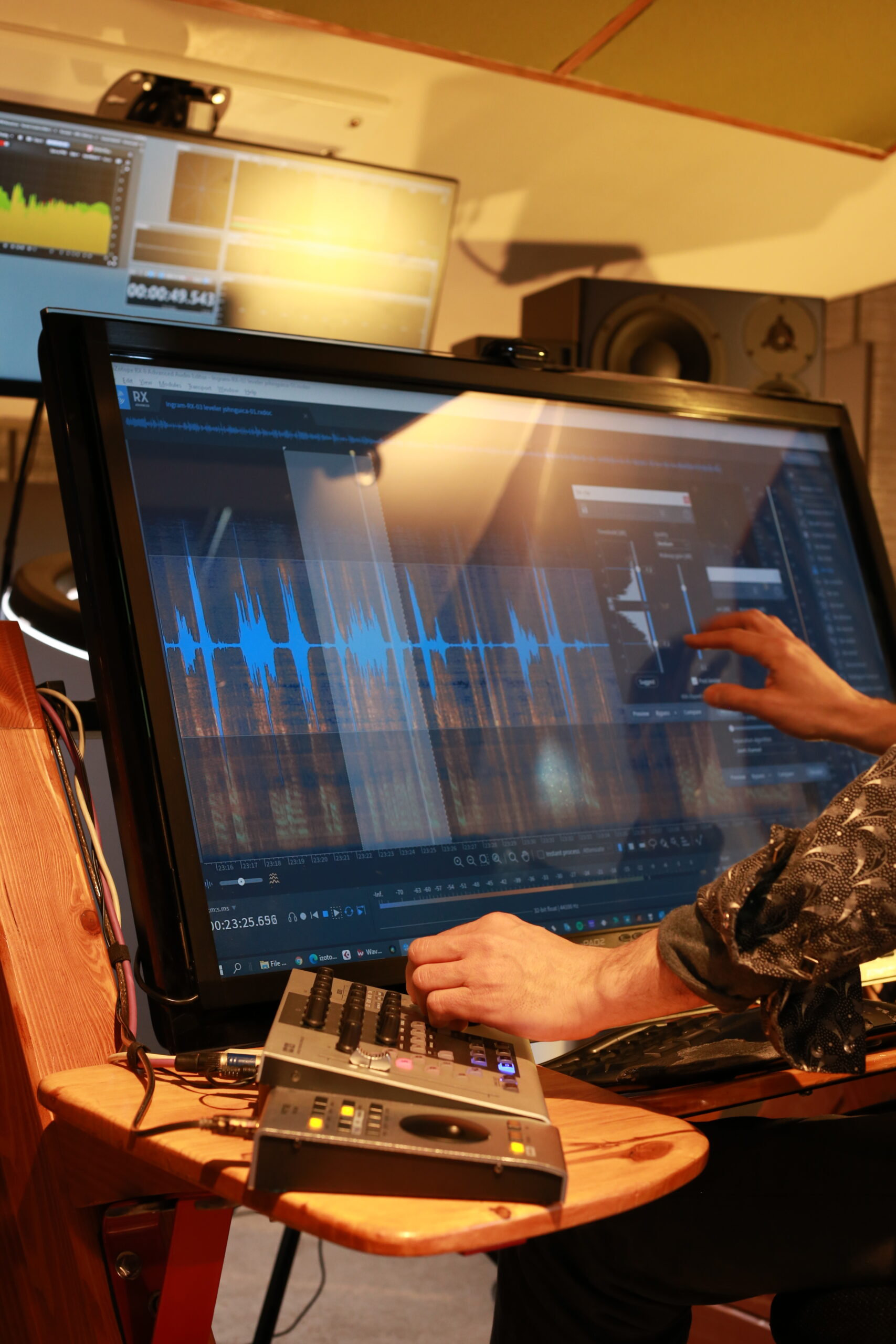
Audio enhancement is a process of improving the quality of an audio recording to make it easier to hear and understand. This technique involves reducing background noise, adjusting levels, and improving the overall clarity of the original recording. Audio enhancement is often necessary when dealing with recordings that are difficult to hear or understand, such as recordings made in noisy environments or recordings that were made using low-quality equipment.
Reducing noise in digital audio recordings plays a critical role in audio clarification. By removing unwanted noise, such as background sounds or audio artifacts, audio experts can isolate and enhance the voice of a person speaking, background sounds, location factors, and other contextual elements.
Examples of when audio enhancement is necessary include recordings of police interviews, emergency phone calls, and surveillance footage. In these situations, the audio may be distorted or difficult to hear, making it challenging to use as forensic evidence.
Ultimately, the success of identifying wanted audio signals often depends heavily on the ability of the engineer to reduce noise and enhance the quality of the audio recording. Stellar Audio Forensics follows the published guidance for the enhancement of digital audio set by the Scientific Working Group on Digital Evidence to improve the intelligibility of the signals of interest.
Sound Comparison

Sound comparison examines whether the speech in a recording is consistent, or inconsistent, with a known voice sample. It is a comparative, qualitative assessment, not a categorical identification.
The examiner compares features such as pitch, formant structure, timing, and speech patterns between the questioned recording and a known sample, and reports the degree to which the evidence supports or argues against a common source. Recording quality, background noise, and the amount of usable speech all limit how far any comparison can go.
Where a recording cannot support a reliable comparison, that is stated plainly. A categorical “this is the speaker” identification is outside the scope of this analysis; when a matter calls for it, it is referred out.
Audio Authentication
When it comes to legal proceedings, reliable evidence is crucial. Audio authentication plays a vital role in ensuring honesty and precision in audio evidence. By analyzing recording devices, microphones, and environments, audio authentication can detect indications of tampering, providing valuable insights into the authenticity of evidence presented in court.
Audio authentication is an essential tool in the world of forensic audio analysis. While simpler and less costly methods may exist, audio authentication provides valuable insights in legal proceedings.
In cases where a phone call recording is presented as evidence, audio authentication can assess whether it shows signs of having been tampered with or manipulated. Experts analyze multiple factors, including recording devices, microphones, and environments, to detect alterations.
With the help of audio authentication, forensic audio analysts provide reliable and accurate evidence that can be significant in a case.
The cost of audio authentication varies based on case complexity and analysis needed. Simple methods can analyze digital audio recordings in some cases, but more advanced techniques like sound comparison or signal processing may be necessary, significantly raising the cost.
Audio authentication becomes important when the credibility of audio evidence is central to a case.
Take the First Step toward Clarity.
Reach out with your questions or a short recording to receive an initial evaluation.
Advancements in Forensic Audio
Audio analysis has supported investigations and litigation for decades. Early on it was limited by the tools available, and recordings that were faint or degraded often could not be examined usefully.
Advances in audio tools have widened what is possible: recordings that once resisted analysis can now be examined and, where the source allows, clarified. That has expanded what examination can contribute to a matter, for either side, while the same scientific limits still apply to what any recording can yield.
Challenges of Forensic Audio
Forensic audio analysis is not always a straightforward process, and there are a number of challenges that can arise during analysis. Many issues can affect accuracy and make it difficult to draw firm conclusions from the audio evidence.
Poor Audio Quality
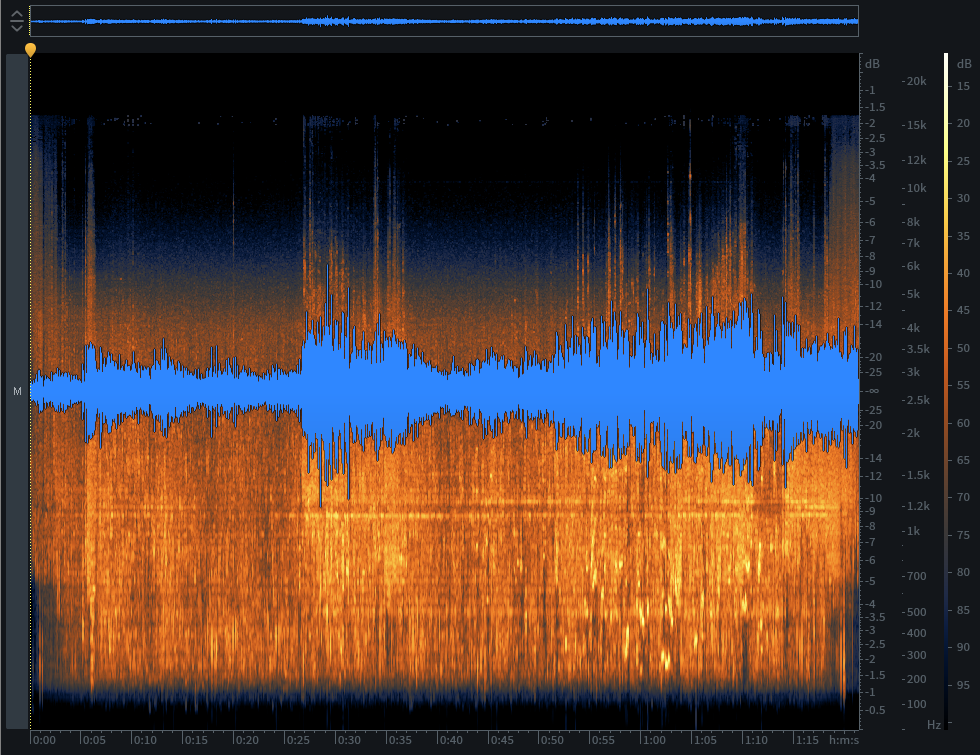
One of the biggest challenges in forensic audio analysis is poor audio quality. Poor audio quality can arise for a number of reasons, including background noise, low volume, and poor audio or video recording equipment. In some cases, it can be difficult to hear or distinguish voices or sounds in the audio file, which can make it challenging to analyze.
Unfortunately, poor audio quality can greatly impact the analysis and accuracy of forensic audio evidence. In some cases, it may even render the audio evidence unusable. For example, if an analog recording, or even digital recording, is so poor that it cannot be clearly understood, it may carry little weight in court.
Source of Audio
When it comes to audio forensics, one of the biggest challenges is figuring out where the audio came from. Knowing the source of the audio is essential, as it can have a significant impact on how evidence is interpreted.
To determine the source of the audio, forensic experts use a variety of techniques. They analyze factors such as background noise, room acoustics, and audio quality to gather clues. They also use advanced software and equipment to study the recording device and assess the source of the audio.
Identifying the source of audio is particularly important in legal proceedings, where the evidence can be central to a case. Without knowing where the audio came from, it can be difficult to accurately interpret the evidence. By assessing the source of the audio, forensic experts can provide valuable insights that help clarify what the recording shows.
While it can be a complex and time-consuming process, identifying the source of audio is a vital component of audio forensics. By doing so, experts can provide reliable and accurate evidence that can be valuable in legal cases.
The Examiner’s Role
Forensic audio examination contributes one thing to a case: an objective, documented assessment of what a recording contains and whether it can be trusted. It does not decide the case, that is for the court. What it can do is give counsel a clear, defensible read of the audio: what is on it, what was done to it, and where the limits of the analysis lie.
That assessment is reported the same way regardless of who retained the examiner, and it states plainly what the recording can and cannot support.
[some images courtesy of pexels.com]
