
Working With Faint, Noisy Recordings
What you hear may not be what’s really there.
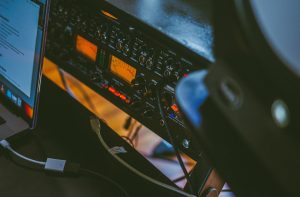
Some recordings arrive with the speech nearly buried: a low signal-to-noise ratio, heavy background, a distant or obstructed microphone. The question is always the same: how much of what was said can be made intelligible without changing it, and how much simply was not captured. Audio enhancement is the careful, documented process of improving intelligibility where the source allows, and saying plainly where it does not.
The Expertise of Audio Forensics Professionals
Working with low signal-to-noise recordings takes more than running a file through a tool. The examiner has to separate the speech of interest from the noise around it, decide what processing the specific problem calls for, and keep track of what each step does to the audio. Much of the work is patient and methodical.
“Audio has an almost magical ability to convince, and to mislead.”
How the Work Is Done
The examiner works from a copy of the original, never the evidence file itself. The speech of interest is identified against the background, and operator-driven processing is applied: equalization on the relevant frequencies, noise reduction built from a learned profile of the actual noise, spectral repair on isolated artifacts. Each step is chosen to fit the specific recording rather than a one-size boost. Much patience and trial-and-error are required on the part of the engineer.
When words are lost in ambient sound, the goal is to make as much as possible intelligible while preserving the natural character of the recording. Some passages improve; some do not. Both outcomes are documented.
Reducing Background Noise
Noise reduction is selective, not a blanket pass. The aim is intelligibility while keeping the natural dynamics of the audio intact and not introducing artifacts or altering meaning. Wind, machinery, and other intrusive sounds can often be brought down; the limit is firm. Enhancement cannot recreate speech that was never recorded.
Working With Audio in Video
Speech buried in a recording can sometimes be made more intelligible with careful, operator-driven processing, each tool chosen to fit the problem. Audio is also extracted from video for closer access, and audio events are considered in context with the video, for example, timing gunshots captured across several recordings at different distances from the event. The work goes only as far as the source supports, and the limits are stated.
Legal Implications: Audio in Court
Why Clarity Matters in Legal Contexts
In legal proceedings, where every word matters, the point of the work is to present what the recording actually contains, improved for intelligibility where possible, unaltered in substance, and documented so it can be relied on.
Audio Authenticity
Beyond clarifying sound, authentication is a separate examination: identifying indications of edits or inconsistencies in a recording, where they are detectable.
The examiner reviews the recording for signs of intentional alteration, discontinuities in the natural flow of the audio that may indicate manipulation, and reports what is and is not supportable.
Audio forensics can also assess differences between audio files, examining the characteristics of each to document distinctions relevant to a legal question.
Take the First Step toward Clarity.
Reach out with your questions or a short recording to receive an initial evaluation.
The Essential Role of Chain of Custody in Audio Forensics
Legal credibility depends on a clean chain of custody. This goes beyond paperwork. The examiner documents the handling of the recording from the moment it is received.
The chain of custody is a record that documents the path of the original recording from receipt through any courtroom use. It is a detailed, transparent account that supports the integrity and reliability of the audio, preserving the unaltered state of the recording throughout.
What the Record Can Show
The value of the work is an objective, documented read of what is on the recording and whether it can be relied on. For example, we have identified pen writing in a deposition recording where opposing counsel stated that “no notes were taken.” Details like that can matter to a case. Findings are reported the same way regardless of who retained the examiner.
Reporting
The result is presented plainly: what the recording supports, what it does not, and the limits of the analysis, an honest account rather than a promised outcome.
The Benefits of Professional Audio Forensics
Beyond the courtroom, working with a professional examiner means a documented, repeatable process and an honest account of what the recording does and does not support.
1. Professional Opinions
A qualified examiner’s opinion is grounded in the analysis and the standards the work follows, not in an automated guess.
2. Multiple Revisions
Unlike automated tools, the examiner can refine the work across passes, with each adjustment documented.
3. Written Reports
A written report records the analysis, the methods used, and the findings, with the limits stated. Reports are prepared on the request of retaining counsel.
4. Maintaining Chain of Custody
The chain of custody is maintained throughout, so the recording is handled and presented in a documented, unaltered state.
5. Audio Authentication
Authentication is available as a separate service: assessing whether a recording shows indications of editing or inconsistency, where detectable.
6. Additional Services
Additional services include sound comparison, assessing whether a questioned voice is consistent or inconsistent with a known sample, not a categorical identification, and analysis of more complex recordings. Work that requires a categorical match to a specific speaker is referred out.
7. Peace of Mind
The outcome is a clear, documented result you can rely on, with an honest account of its limits.
What to Expect
Bring the file. You’ll get an honest assessment of what is feasible before significant time is invested, and a documented result with its limits stated. Working with low signal-to-noise recordings takes both technical skill and judgment, and the work goes only as far as the source supports.
To put important audio and video files in experienced hands, consider Stellar Audio Forensics for audio enhancement services, cleanup, and forensic analysis. Clarifying voices is careful, operator-driven work, improving intelligibility within the limits of the source.
