
The question used to be straightforward: is this recording what it claims to be? Has it been edited, spliced, or altered?
Those questions still matter. But a new one has joined them, and it is reshaping how courts evaluate audio evidence: Could this recording have been generated entirely by artificial intelligence?
Voice cloning technology has advanced to the point where synthetic speech can be produced from relatively small samples of a person’s voice. The legal system is responding, but the gap between what technology can produce and what existing evidentiary rules were designed to address is widening. For attorneys who rely on audio evidence, or who need to challenge it, understanding this shift is practical, not theoretical.
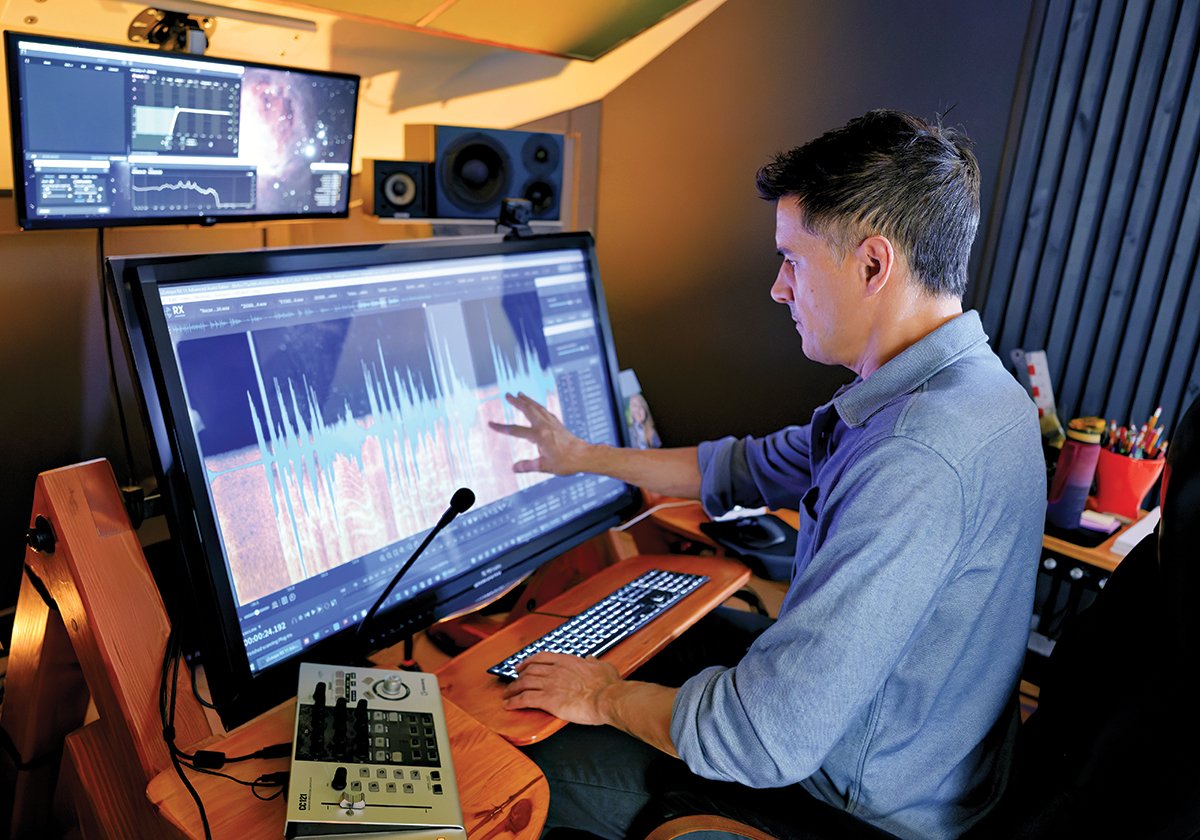
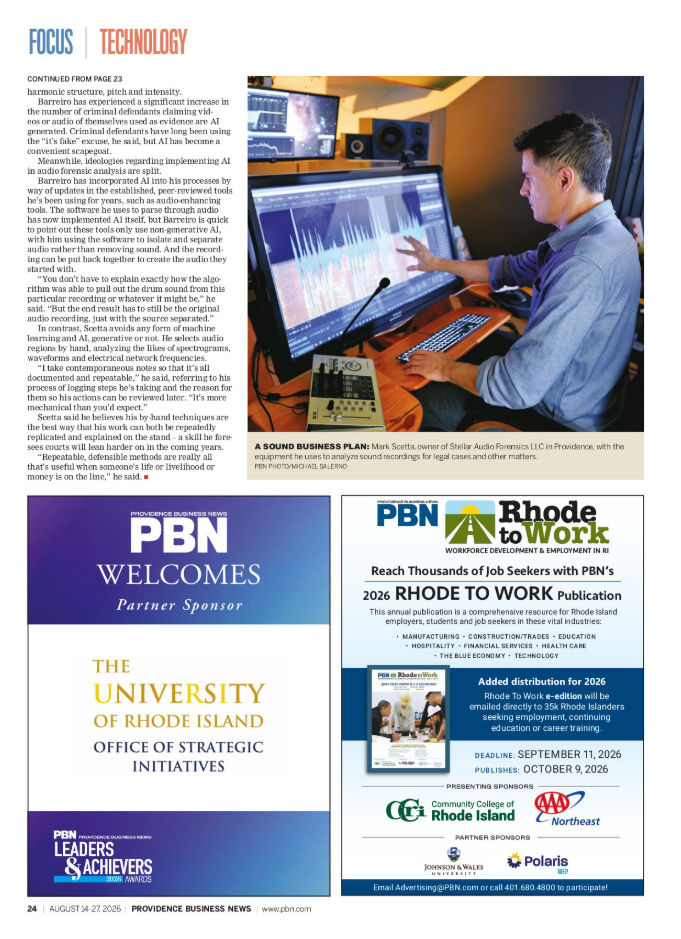
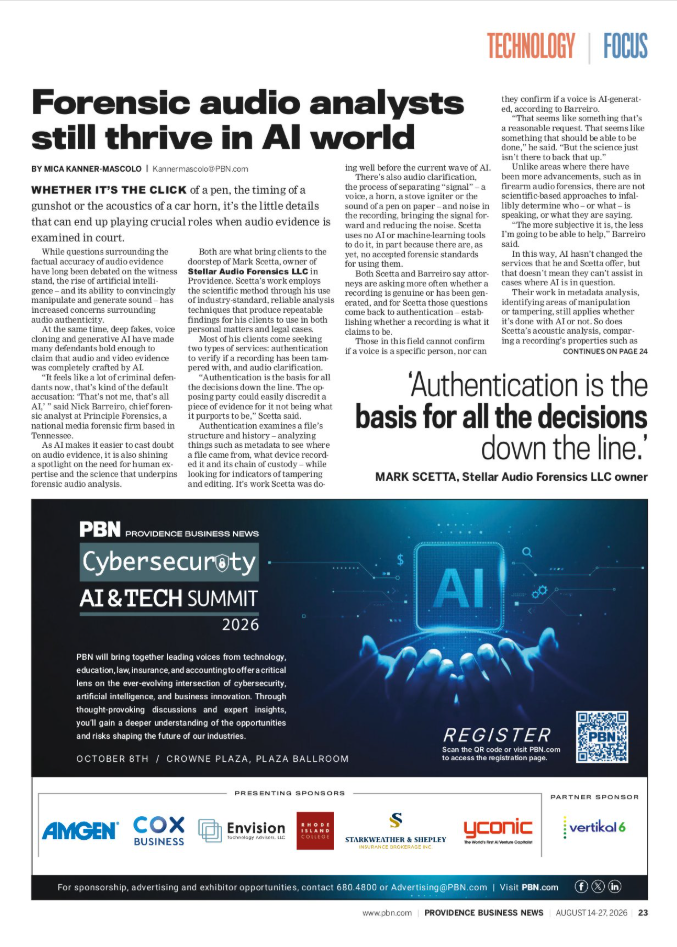
Covered in the press. The way I approach this problem, by hand and with repeatable methods, was recently featured in Providence Business News. As I put it there, “repeatable, defensible methods are really all that’s useful” when a case turns on a recording. (Mica Kanner-Mascolo, Providence Business News, Aug. 14, 2026.)
The Authentication Landscape Is Changing
Traditional audio authentication examines whether a recording has been altered after it was captured: splicing, insertion, deletion, re-encoding. These methods remain essential and effective. But they were developed for an era when creating convincing fake audio required significant technical skill and specialized equipment.
AI-generated audio presents a different challenge. A synthetic recording may not show signs of editing because it was never edited, it was generated from scratch. The question in the courtroom is no longer only “was this recording modified?” It is now also “can this recording be trusted at all?”
Here is what I can and cannot tell you. I do not claim to tell you whether a voice was generated by AI. No reliable, accepted method for that exists yet. Some commercial tools advertise AI or deepfake detection, but independent testing has produced inconsistent results, and there is no scientific consensus or accepted forensic standard behind them. I stay with what repeatable analysis can support, and I tell you plainly where it cannot.
What I do is examine file integrity, metadata, chain of custody, and the acoustic content itself, by hand, using repeatable methods and no AI or machine-learning tools. That work addresses whether a recording is what it claims to be, and that is what usually matters in a case. My findings describe what the evidence shows, for example, no indicators of editing within the scope examined. They never declare a recording “authentic,” and they never label a recording “AI-generated.”
What AI does is raise the stakes on careful authentication. The older questions matter more now, not less: has this file been altered, does its metadata hold together, is its chain of custody intact.
Proposed Rule 707: What It Means for Audio Evidence
The federal judiciary is responding to AI-generated evidence concerns. Proposed Federal Rule of Evidence 707 directly addresses a gap in the existing rules. After public comment closed in February 2026, the Advisory Committee on Evidence Rules withdrew the proposal as published (May 7, 2026) and is studying a revised draft. It is not law.
What the Published Draft Said
The proposed rule states:
“When machine-generated evidence is offered without an expert witness and would be subject to Rule 702 if testified to by a witness, the court may admit the evidence only if it satisfies the requirements of Rule 702(a)-(d).”
In practical terms: if AI or machine-learning tools were involved in generating or processing evidence, that evidence would have had to meet the same reliability standards as expert testimony: testable methodology, sufficient facts or data, reliable principles and methods, and reliable application to the case at hand.
The published draft exempted simple scientific instruments. The revised draft now under study drops that exception, uses the term “artificial intelligence” instead of “machine-generated,” and adds a notice requirement.
The Deepfake Question: Draft Rule 901(c)
The committee has also drafted a rule on evidence alleged to be a deepfake, Rule 901(c). It has not been approved or published for comment.
For audio evidence, the question does not wait for a new rule. If AI tools were used at any stage of the work, whether to enhance a recording, generate a transcript, or detect manipulation, an expert who relied on them can still be asked under Rule 702 which tool was used and whether it is reliable for the case at hand.
Timeline
Neither rule is law. With both still under study, no federal rule on AI-generated evidence can take effect before December 1, 2028. Until then, AI-related challenges to audio are argued under the existing authentication rules.
Attorneys preparing cases that involve audio evidence should understand these proposed requirements now, regardless of when they take formal effect.
State-Level Action Is Already Underway
Federal rulemaking moves deliberately. Some states are not waiting.
Louisiana enacted HB 178 (effective August 1, 2025), the first statewide framework specifically addressing AI-generated evidence in court proceedings. The law requires attorneys to exercise reasonable diligence to verify the authenticity of evidence before offering it to the court. If a party knows or has reason to know that exhibits have been falsified, including through AI generation, disclosure is required.
Other states are considering similar legislation. The trend toward legislated authentication obligations for AI-related evidence is developing across jurisdictions.
The “Liar’s Dividend” Problem
Courts now face a dual challenge:
- Fabricated evidence presented as authentic. AI lowers the barrier to creating convincing fake audio.
- Authentic evidence challenged as fabricated. The mere existence of deepfake technology gives parties a basis to challenge legitimate recordings, sometimes without factual support.
This second problem, sometimes called the “liar’s dividend,” is particularly concerning. If any recording can be questioned simply by invoking the word “deepfake,” the evidentiary value of all audio evidence is undermined.
Proactive authentication addresses both sides. When a recording has been forensically examined and its authenticity documented before challenges arise, baseless deepfake allegations carry less weight. And when a recording genuinely has been manipulated, forensic examination provides the technical evidence to document it.
Learn about authentication methodology: Audio Authentication Services
What Attorneys Should Consider Now
The authentication landscape will continue to evolve as the federal rules committee continues its work and state legislation expands. Several practical steps are relevant regardless of how specific rules develop:
Authenticate proactively, not reactively. Waiting until opposing counsel challenges a recording means responding on their terms. Having authentication analysis completed beforehand strengthens your position, whether the recording supports your case or you need to challenge theirs.
Preserve original files. Every conversion, compression, or transfer can reduce the information available for authentication analysis. Obtain recordings in their original format and maintain documented chain of custody from the earliest possible point.
Understand the limitations. No forensic method provides absolute certainty about a recording’s authenticity. A qualified forensic examiner will tell you what the analysis can and cannot determine, and that honesty is what makes the analysis credible under cross-examination.
Retain expertise early. Authentication analysis takes time, and the results may shape litigation strategy. Early retention allows for a verbal assessment before discoverable documents are created, giving you information to guide decisions without committing to a formal report prematurely.
Related: What to Do When Opposing Counsel Challenges Your Audio Evidence
Related: Steps for Verifying Audio File Authenticity
Understanding Scientific Limits of Audio Forensics
While forensic audio techniques can improve intelligibility when recording conditions allow, they cannot recreate speech or sounds that were never captured in the original recording. All audio forensic methods operate within scientific boundaries determined by acoustic principles and recording technology limitations.
The effectiveness of forensic audio analysis depends on multiple factors:
- Source recording quality and technical specifications
- Microphone characteristics and positioning during capture
- Recording distance and environmental acoustic conditions
- Background noise levels and frequency overlap with speech signals
- File format, compression, and any processing applied before forensic examination
Some recordings contain sufficient signal quality to respond well to forensic techniques. Others may be too compromised by excessive distance, severe interference, or poor recording conditions to yield significant improvement. Forensic clarification works with existing acoustic content; it cannot generate information that was never recorded or has been permanently lost due to equipment limitations or environmental factors.
The goal of forensic audio analysis is to provide objective technical assessment of what exists in a recording, within the boundaries of what the source material can support. This means understanding not only what forensic methods may reveal, but also acknowledging when technical limits prevent meaningful improvement. No forensic process can guarantee specific results, as outcomes depend entirely on the characteristics of the original recording.
Consult on Audio Evidence
Reach out when a recording’s authenticity is in question.
As It Appeared in Providence Business News
“Forensic audio analysts still thrive in AI world” by Mica Kanner-Mascolo, Providence Business News, August 14, 2026, pages 24 and 26. Reproduced with the permission of Providence Business News.
Your Examiner
Mark Scetta is an independent forensic audio examiner, SEAK-trained expert witness, AES and HTCIA member, with methodology aligned with SWGDE and ABRE standards. Discuss a case with Mark.
Available to plaintiff or defense counsel.
