What you hear may not be what’s really there.
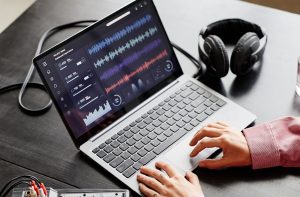
When you’re dealing with recorded evidence, there’s a lot riding on getting the facts right. Whether it’s a conversation caught on a phone or hours of surveillance audio, one editing mistake can throw everything into question. Audio files used in sensitive situations like court cases or personal disputes need to be handled in a way that doesn’t accidentally change or weaken the original message. That’s why how you edit the audio matters just as much as what’s being said in it.
Audio editing techniques can help bring clarity to a file, revealing what’s hard to hear without making the whole thing sound fake or unnatural. The goal is simple: improve the sound while keeping the evidence untouched. It’s not about making a recording sound perfect. It’s about showing what’s there, clearly and reliably. The right process keeps things accurate, secure, and useful, no matter who’s listening to the final file.
Understanding Forensic Audio Enhancement
Forensic audio enhancement is a special kind of editing that improves unclear recordings without damaging their reliability. It’s not used for creating music or effects. It’s used for making speech clearer, reducing distractions, and keeping the recording as honest as possible. There’s a fine line between helping a listener hear better and changing what’s actually being said. So the process has to be precise and methodical.
“Audio has an almost magical ability to convince, and to mislead.”
In legal settings, audio recordings are often a part of larger investigations. Clarity becomes a major concern when lawyers or others need to understand every word. If the file includes overlapping speech, sudden noise disruptions, or echoes, it may be challenging to use in court without some level of technical help. But there’s always a responsibility to maintain authenticity. Any edits must be easy to explain and able to stand up to close examination.
On the personal side, someone might need audio clarified if they’re trying to protect themself or someone else. Maybe they’ve captured something worrying during a phone call or have messages that don’t seem clear but feel important. The approach still needs to be careful. Private recordings may feel more emotional, but they’re handled with the same care and structure, because even one slip could shift the meaning of what’s being reviewed.
This type of work always comes back to trust. Trust in the tools, trust in the workflow, and trust that the end result reflects what really happened. Nothing added, nothing hidden.
Techniques For Preserving Evidence Integrity
When enhancing audio, keeping the original recording safe is the first responsibility. Once a file is edited in a way that can’t be reversed, it’s no longer useful as pure evidence. That’s where non-destructive editing comes in. It means working on a new version while the original stays untouched. This makes sure that if someone wants to check how the editing was done or compare details, there’s something solid to go back to.
Some of the most reliable ways to preserve evidence integrity include:
- Always working from a copy, never the original source
- Keeping clear records of every change made in the editing process
- Using metadata to track file history and edits so file authenticity can be checked later
- Saving edited audio in a lossless format that doesn’t lower quality
Metadata plays a quiet but important role here. It’s the behind-the-scenes information stored in an audio file, like when it was created, what device was used, or if someone edited it. This kind of data builds a digital trail. If someone questions whether a file is real, the metadata helps establish that no one has tried to fake or alter anything without detection.
Preserving evidence integrity isn’t just about technical skill. It’s about doing things the right way, step by step, so the audio holds up under scrutiny. Whether that’s from a judge, investigator, or someone seeking closure.
Methods For Clarifying Audio Without Alteration
When someone listens to audio evidence, parts of it can be hard to hear clearly. Maybe there’s a lot of wind in the background, or voices overlap during a key moment. Instead of removing chunks of recording or guessing at what was said, a more accurate approach is to use sound clarification tools that bring the important elements forward without rewriting the past.
The main goal isn’t to make the file sound completely clean. It’s to help the listener better identify what was recorded in the first place. That way, what’s important can be heard as clearly as possible without changing the original content.
A few supportive methods include:
- Noise reduction filters to suppress sounds like hums, traffic, buzzes, or fans that hide speech
- Frequency isolation tools that separate voice from sharp or overlapping sounds
- Volume leveling that brings out quiet voices without overwhelming the rest
- Spectral editing to visually spot intrusions and remove them without altering key content
It’s also common to isolate specific voice tones for clarification. Let’s say someone provided a voicemail where two people are arguing in the background and someone makes a vague statement. Rather than cutting out everything, expert tools can bring that one phrase into focus while keeping the other layers intact. The meaning becomes easier to follow, even if the rest of the audio stays busy.
What matters most is how these tools are applied. If done by someone unfamiliar with forensic methods, it’s easy to over-edit and remove content that affects meaning. Clarification should always support understanding, not distort it.
Take the First Step toward Clarity.
Reach out with your questions or a short recording to receive an initial evaluation.
Supporting Legal Access: The Chain of Custody
Once audio leaves its original device, its path needs to be well-documented. Every time it’s copied, analyzed, renamed, moved, or shared, there’s a risk of someone asking later: was this file changed? That’s why chain of custody exists. It’s a simple but strict way of keeping a record so that anyone involved knows exactly where the audio has been and who’s had access.
A clean chain doesn’t just protect the recording. It protects people. Without it, even accurate recordings can get questioned or dismissed because there’s too much room for doubt.
To make sure audio stays usable in legal settings, it helps to keep these steps in mind:
- Always label and store original files securely
- Use a logging system to track every transfer, copy, and review
- Back up every version so each step is easy to trace
- Avoid re-saving files under new names unless required, and document when you do
Professionals also document technical settings during each edit. That includes software version, the file path, export format, and even the devices or hard drives involved. While it may look like over-preparation, extreme details can be the difference between a recording holding weight in court or being set aside completely.
Legal professionals know how quickly a strong case can fall apart if the foundation isn’t protected. So whether audio is used in a courtroom or mediation room, its history should be as well-documented as its content.
Why Clarity Means More Than Just Clean Sound
When handled right, audio editing can bring truth into the open. But the truth isn’t just what someone hears. It’s how it was preserved. Every decision in the editing and review process should support the idea that nothing was hidden, added, or removed in a way that changed what happened.
Whether the recording is being used in a heated dispute, a criminal case, or a private situation, it deserves accurate treatment. That means using the right techniques, keeping original files secure, and relying on methods that are trusted, repeatable, and legally sound.
Strong results come from a strong process. And when audio evidence might shape big decisions, there’s value in knowing the work behind it holds up to questions and challenges.
Understanding Scientific Limits of Audio Forensics
While forensic audio techniques can improve intelligibility when recording conditions allow, they cannot recreate speech or sounds that were never captured in the original recording. All audio forensic methods operate within scientific boundaries determined by acoustic principles and recording technology limitations.
The effectiveness of forensic audio analysis depends on multiple factors:
- Source recording quality and technical specifications
- Microphone characteristics and positioning during capture
- Recording distance and environmental acoustic conditions
- Background noise levels and frequency overlap with speech signals
- File format, compression, and any processing applied before forensic examination
Some recordings contain sufficient signal quality to respond well to forensic techniques. Others may be too compromised by excessive distance, severe interference, or poor recording conditions to yield significant improvement. Forensic clarification works with existing acoustic content; it cannot generate information that was never recorded or has been permanently lost due to equipment limitations or environmental factors.
The goal of forensic audio analysis is to provide objective technical assessment of what exists in a recording, within the boundaries of what the source material can support. This means understanding not only what forensic methods may reveal, but also acknowledging when technical limits prevent meaningful improvement. No forensic process can guarantee specific results, as outcomes depend entirely on the characteristics of the original recording.
FAQ
1. How does forensic audio enhancement help in legal cases?
It helps clarify unclear parts of recordings so that speech can be understood better. This can support an investigation or hearing but must be done in a way that doesn’t change the meaning or structure of the audio.
2. What is the importance of maintaining the original file integrity?
The original file supports that nothing has been added, deleted, or changed. It acts as a reference to evaluate the accuracy of any enhancements or clarifications made later.
3. What are non-destructive editing methods?
These are techniques that don’t alter the original audio file. Instead, edits are made on a copy, allowing for changes while keeping the source data untouched.
4. How can background noise be reduced without altering the evidence?
Using filters or noise reduction tools, specific sounds like hums or traffic can be quieted, allowing speech to stand out. The original voice or conversation stays intact.
5. Why is the chain of custody important for audio evidence?
It supports that the file hasn’t been tampered with. By tracking everything from storage to who worked on it, you make sure the evidence stands up to legal and professional review.
To explore how careful and methodical work can bring clarity to your audio files, learn more about how Stellar Audio Forensics approaches forensic audio enhancement. Trust us to handle recordings with accuracy and care, making sure every key detail is preserved and clearly presented.